
BizLife Video | Intro How Did Money Even Happen, Anyway?
Have you ever looked at the notes and coins in your pocket and thought, “How did that happen?”
Pretty much everything we do costs money:
Your food…
Your house…
Entertainment…
It can even cost you money to get to work to make money!
But how did we decide that pieces of paper and metal discs with people’s faces and historical places on them would be how we would pay for things?
Have you ever thought about…A TIME BEFORE MONEY?
You may not have ever thought about it, but there actually was a time before money, but there has probably never been a time without trade.
For as long as people have been making and growing things – tools, jewelry, food, clothes, whatever – they have been trading them for things that other people make or grow.
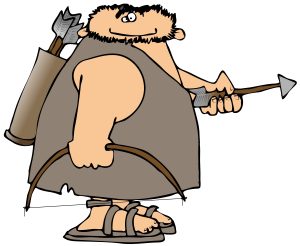 Say you’re a hunter gatherer and you make really nice arrows that are good for hunting food. Word gets around, and your friend down the road who isn’t as good at making arrows asks if he can trade some extra skins that he’s got for you to make him some.
Your arrows have value to him, his furs have value to you, and now you’re trading!
This works fine on a small person to person scale with single items, but what about when we’re in a larger society? It’s not very easy to drag a cart load of grain through a market to make your purchases.
This might surprise you, but in a way, banks predate money.
Some ancient civilizations in Egypt and China used a system of depositing goods into temples or state warehouses that would then issue a note stating how much of your goods you had left with them. In a way, it’s an early form of current account – you can take your certified note to the market instead of dragging along your cart, and the shopkeeper can take your note to the warehouse and collect whatever you agreed to trade.
After a while, to simplify the system even more and make trading even easier, a representative currency had to be created – enter: the coin…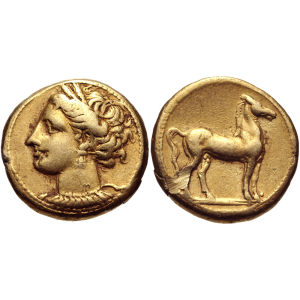
One of the best examples of this is the shekel – an ancient Mesopotamian currency that was based on the weight of barley. Coins could be made of bronze or silver or, everyone’s favourite, gold.
Gold and silver coins soon became all the rage and became a standard to themselves, because they were metals with value of their own, and so made trading a lot simpler once everyone agrees on the value of them. Coins made more complex trading easier. If you grow grain and want bread you may be able to trade grain for bread, but what if the baker already has plenty of grain and needs eggs?
Using coins to trade meant that instead of having to grow your own grain to make bread, you could work at something else entirely, like being a builder, and you could be paid in coins that would allow you buy bread, or fruit, or shoes from the market, even if those makers didn’t need your own goods.
Everyone has a thing that they can do or make, and then trade for money. Some people still trade goods and services directly – if you fix my roof, I’ll fix your car – but money certainly makes things easier.
Forms of Currency
For most of history, coins have been the most common form of currency, but they aren’t the only currency in use. For example, some societies have used special kinds of shells, and the Yap people in Indonesia use giant stones with a hole cut in them – bet 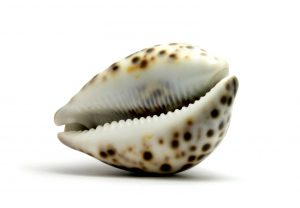 you’re glad you don’t have to shop with those! Canada currently holds the record for the largest legal tender coin in the world right now with the One Million Canadian Dollar gold coin!
Here in Ireland, our first coins were brought in by the Vikings, who had coins from lots of places with them – western Europe under Charlemagne, Anglo-Saxon – even coins from as far away as Asia.
Eventually, though, paper notes took over because it’s just easier to carry a piece of paper that says “one hundred Euro” on it than it is to carry fifty, two-euro coins in your pocket.
And now, instead of lots of notes and coins, you can also carry a little plastic card covered with your name and some numbers on it. Instead of having to leave your cows and chickens with the local governor, now your money rests in a bank account that you can access with a swipe or a tap, and tomorrow you might not even need to do that much. Technology is changing the way we use money, and even the very definition of money, so who knows what we’ll be trading in the future!
One thing is sure, though – money has been around for a long time, and it has been an essential part of our progress on all sorts of levels, helping us gather the goods we need to live, to eat and to grow our families or businesses. And no matter how much money we have to manage, the good news is that An Post has developed this program to help you manage the money you make…without worrying about where to keep your chickens.
[notepad]
Junior Cycle Business Studies Specifications
- Strand one: Personal finance
- Element: Managing my resources
- 1.1 Review the personal resources available to them to realise their needs and wants and analyse the extent to which realising their needs and wants may impact on individuals and society
- Element: Managing my resources
Curriculum Elements of the 8 Key Skills of the Junior Cycle
- MANAGING MYSELF
- Knowing myself
- Making considered decisions
- Setting and achieving personal goals
- Being able to reflect on my own learning
- MANAGING INFORMATION & THINKING
- Gathering, recording, organising and evaluating information and data
- Thinking creatively and critically
- Reflecting on and evaluating my learning
- BEING NUMERATE
- Estimating, predicting and calculating
- Developing a positive disposition towards investigating, reasoning and problem-solving
- Seeing patterns, trends and relationships
- BEING CREATIVE
- Imagining
- Exploring options and alternatives
- Implementing ideas and taking action