Solar Bottle Bulbs
In poverty-stricken areas throughout the world, one resource that many of us take for granted can be surprisingly hard to come by: light. Specifically, indoor light.
For many people, electricity can be too expensive or simply not available. It’s estimated that over a billion people worldwide do not have access to electricity. As for natural light, many of the homes in poor areas are packed very closely together, and don’t have windows.
People often rely on either candles or kerosene lamps, both of which are fire hazards, and give off fumes–hardly ideal.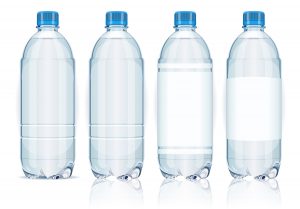
Enter the Moser lamp. In 2002, Alfredo Moser, a Brazilian mechanic, was trying to deal with the darkness in his workshop due to the frequent power outages. Simply cutting a hole in the roof, even if it were covered with glass, would be ineffective. Since light travels in straight lines, the only areas that would be illuminated would be those directly under the holes.
Moser realized that he could build a kind of 3-dimensional window that would allow light to come into the room and be more evenly and thoroughly dispersed, and all he would need would be a few simple components.
He filled a plastic bottle with water and a small amount of bleach. He cut a hole in the roof, inserted the filled bottle so that about a third of it protruded above the roof line, and the rest extended below the ceiling. He sealed the bottle in place, not only so that it wouldn’t move, but also to keep water out when it rains.
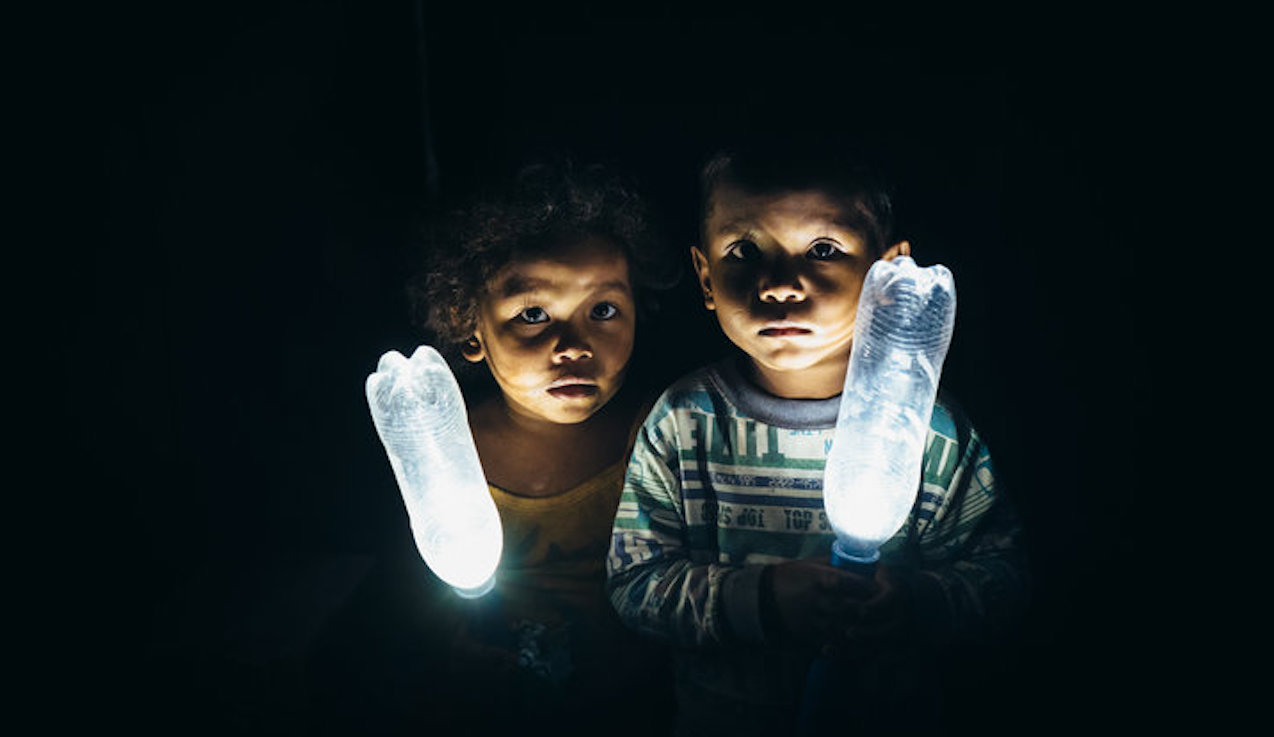
The result? A “bulb” that can give off as much light as a 60 watt bulb on a sunny day. The advantages are obvious: a cheap, clean source of light that is easy to install, non-polluting, and helps put plastic to use instead of being trash. The disadvantages are minor, mainly that there is less light available on overcast days, and none at all at night. This kind of solar power doesn’t feed into a battery, so it’s only accessible during the day.
Or maybe not. To get around this particular issue, some people have started inserting a small test tube with an LED light bulb into the bottle, which is hooked up to a mini-solar 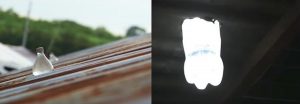 panel on the roof. This way, it works as well at night as it does during the day.
From its beginnings in Brazil, Moser lamps have spread throughout the world. Communities in Africa, India, and southeast Asia have embraced this simple invention.
In 2012, Illac Diaz launched Liter of Light, a program designed to bring Moser lamps to the Philippines. Within months of beginning, they had installed about 10,000 solar bottle bulbs. Within a few years, that number had grown to 350,000 homes, in over a dozen countries, including Egypt, Pakistan, and Columbia, to name a few. Their goal is to reach 1 million people by 2020.
Liter of Light has improved lives beyond the lamps themselves; the program also creates jobs. What began with teaching one man to make the first 1000 bottles has evolved into an ongoing venture with women’s cooperatives building many of the lights.
The future looks pretty bright.
Sources:
[notepad]
Solar Light Bulbs | Reflection
Junior Cycle Business Studies Specifications
- Strand one: Personal Finance
- Element: Exploring Business
- 1.9 Debate the ethical and sustainability issues that arise from their consumption of goods and services and evaluate how they can contribute to sustainable development through consumer behaviour
- 1.10 Discuss and evaluate how globalisation and developments in technology impact on consumer choice and behaviour
- Element: Exploring Business
- Strand two: Enterprise
- Element: Managing my resources
- 2.2 Describe the skills and characteristics of being enterprising and appreciate the role of an entrepreneur in an organisation, in society and to the economy
- Element: Managing my resources
- Strand Three: Our Economy
- Element: Managing my resources
- 3.1 Explain how scarcity of economic resources results in individuals having to make choices; predict possible consequences of these choices
- Element: Managing my resources
Curriculum Elements of the 8 Key Skills of the Junior Cycle
- MANAGING MYSELF
- Knowing myself
- Making considered decisions
- Setting and achieving personal goals
- MANAGING INFORMATION & THINKING
- Gathering, recording, organising and evaluating information and data
- Thinking creatively and critically
- Reflecting on and evaluating my learning
- Using digital technology to access, manage and share content
- BEING NUMERATE
- Estimating, predicting and calculating
- Developing a positive disposition towards investigating, reasoning and problem-solving
- Seeing patterns, trends and relationships
- BEING CREATIVE
- Imagining
- Exploring options and alternatives
- Implementing ideas and taking action
- Learning creatively
- Stimulating creativity using digital technology