

Greta Thunberg: Climate Change Warrior
“Our house is on fire.” These five dramatic words were how Greta Thunberg started her speech given at the 2019 Economic Forum in Davos, Switzerland. The gathering hosted over 3,000 participants from all over the world, including Sir David Attenborough, Shinzo Abe, Angela Merkel, and Prince William.
At first glance, Greta Thunberg didn’t seem like the kind of person to address a group like this. For one thing, she had just turned 16. But it’s not like she jumped into this. Like most big things, Greta’s activism started small.
During the summer of 2018, a record heatwave blazed through northern Europe and forest fires ravaged large areas of Swedish land up to the Arctic. Greta was part of a group that wanted to raise awareness about climate change, but they couldn’t decide how to do it. Thunberg decided that she would do what she could, even if she was by herself.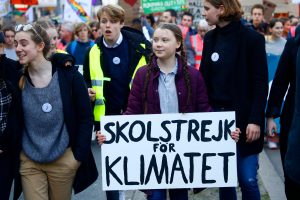
Starting in August, she took every Friday to sit in front of the Swedish Parliament building with a sign declaring that she was on a school strike for the climate. People started joining her almost immediately, and the movement has been growing ever since.
Her outspoken advocacy might seem even more remarkable, given that she was diagnosed with Asperger’s and had always been quiet, but her family sees it as a blessing. She is able to bring focus to issues while avoiding the social distractions that surround them. As for Greta herself, she accepts herself and knows how to use her strengths to best effect.
Unfortunately, personal attacks via social media shortly followed. These might be almost expected in this day and age, but Thunberg (who had also been bullied in school) doesn’t seem bothered by the negativity. In fact, she sees it as a positive thing, proof that she’s making a difference, and that those in power see her and other activists as a threat.
Thunberg’s strikes have inspired people all over the world. In March of 2019, more than 1.4 million people, many of them students, participated in protests in over 1,600 cities in over 100 countries. And in the same month, she was nominated for a Nobel Peace prize (she won’t know if she won until December, but if she does, she’ll be the youngest winner ever).
She’s come a long way from the days when she felt like, “I have always been that girl in the back who doesn’t say anything. I thought I couldn’t make a difference because I was too small.”
Now she knows that no one is too small to make a difference, and so do the rest of us.
Sources:
- https://twitter.com/GretaThunberg?ref_src=twsrc%5Egoogle%7Ctwcamp%5Eserp%7Ctwgr%5Eauthor
- https://www.theguardian.com/environment/2019/jan/25/our-house-is-on-fire-greta-thunberg16-urges-leaders-to-act-on-climate
- https://www.theguardian.com/world/2019/mar/11/greta-thunberg-schoolgirl-climate-change-warrior-some-people-can-let-things-go-i-cant
- https://www.thelocal.se/20190412/greta-thunberg-from-quiet-schoolkid-to-global-climate-activist
- https://www.weforum.org/agenda/2019/01/everything-you-need-to-know-about-davos-2019/
[notepad]


Greta Thunberg | Reflection
Junior Cycle Business Studies Specifications
- Strand one: Personal Finance
- Element: Managing my resources
- 1.1 Review the personal resources available to them to realise their needs and wants and analyse the extent to which realising their needs and wants may impact on individuals and society
- Element: Exploring Business
- 1.9 Debate the ethical and sustainability issues that arise from their consumption of goods and services and evaluate how they can contribute to sustainable development through consumer behaviour
- Element: Managing my resources
Curriculum Elements of the 8 Key Skills of the Junior Cycle
- MANAGING MYSELF
- Knowing myself
- Making considered decisions
- Setting and achieving personal goals
- MANAGING INFORMATION & THINKING
- Gathering, recording, organising and evaluating information and data
- Thinking creatively and critically
- Reflecting on and evaluating my learning
- Using digital technology to access, manage and share content
- BEING NUMERATE
- Estimating, predicting and calculating
- Developing a positive disposition towards investigating, reasoning and problem-solving
- Seeing patterns, trends and relationships
- BEING CREATIVE
- Imagining
- Exploring options and alternatives
- Implementing ideas and taking action
- Learning creatively
- Stimulating creativity using digital technology